
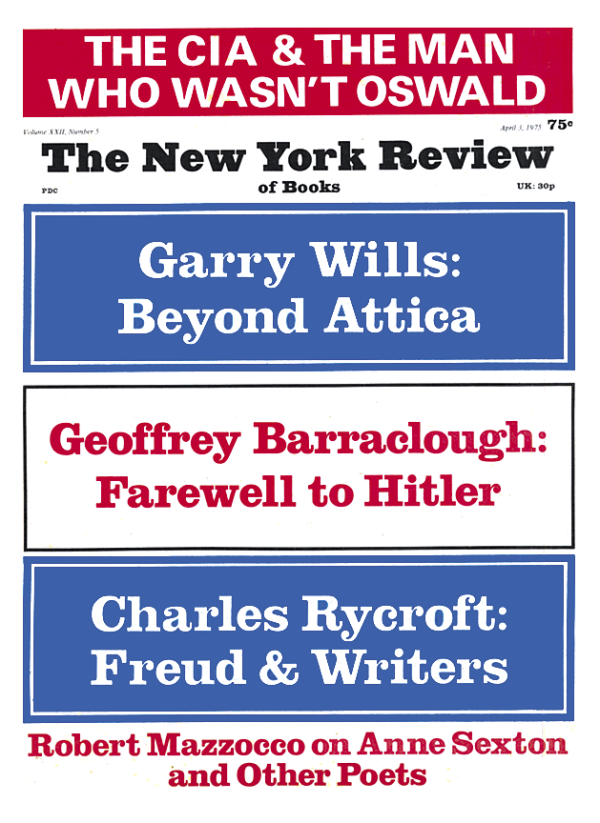
The New York Review of Books
A semi-monthly magazine of long-form reviews and essays.

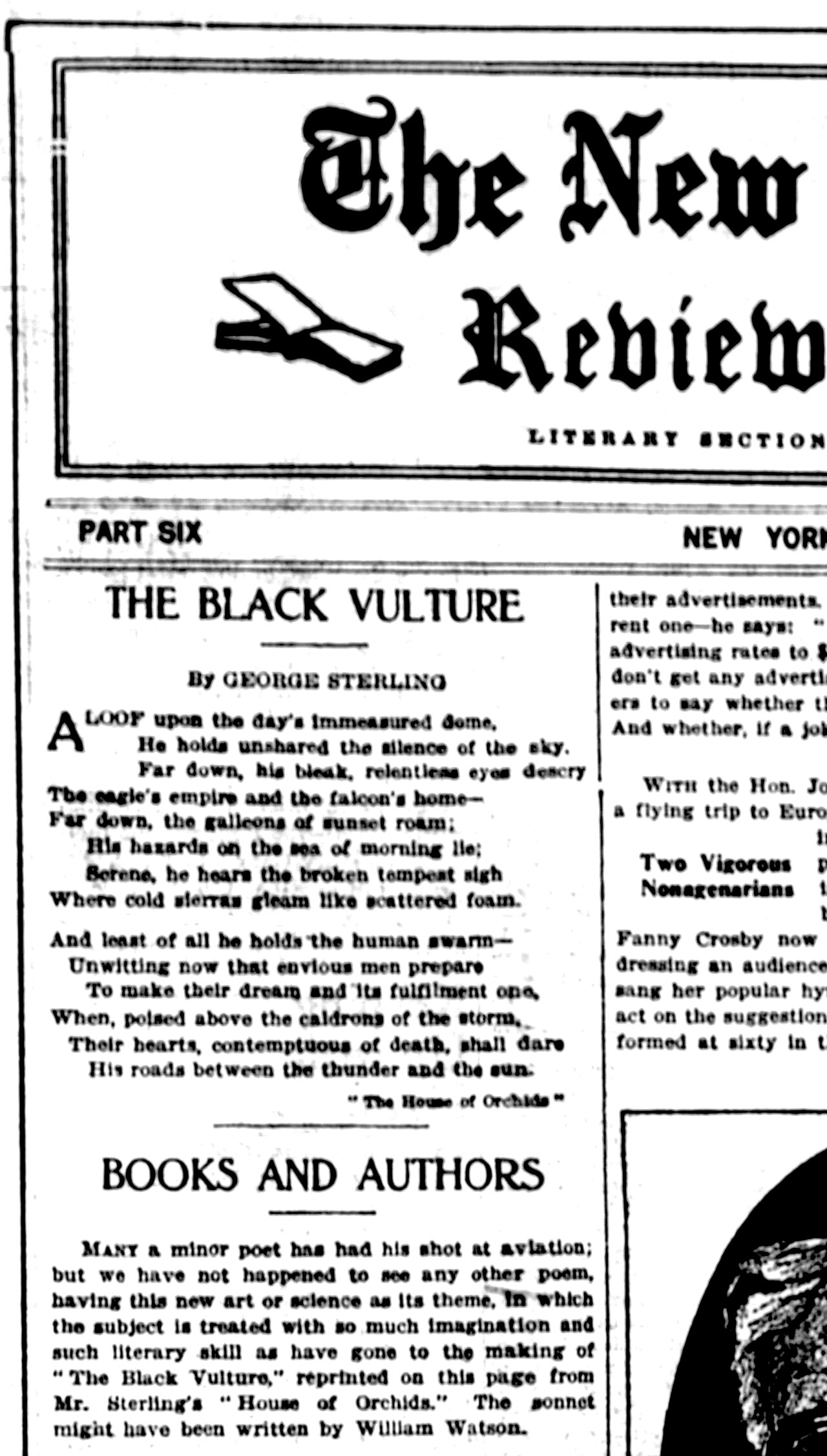
1911 May 7 New York Times Review of Books. This source is more than 100 years ol · Public domain
Silvers, Barbara Epstein, publisher A. Whitney Ellsworth, and writer Elizabeth Hardwick. The magazine is known for long-form reviews and essays on literature, culture, economics, science, and current affairs, and has been called 'the premier literary-intellectual magazine in the English language' by Esquire.
- founders
- Robert B. Silvers, Barbara Epstein, A. Whitney Ellsworth, Elizabeth Hardwick
- field
- Literary and intellectual magazine
- nationality
- American
- known_for
- Long-form book reviews and essays; founding the London Review of Books and an Italian edition; New York Review Books publishing division
Lore & Background
Elizabeth Hardwick, Robert Lowell, and Jason and Barbara Epstein saw a chance to create a vigorous book review. They enlisted Robert B. Silvers as editor, who asked Barbara Epstein to co-edit. Silvers and Epstein edited the magazine together from its founding until Epstein's death in 2006. Silvers then served as sole editor until his death in 2017. An Italian edition, la Rivista dei Libri, was published from 1990 to 2010. The magazine's book publishing division, New York Review Books, was established in 1999.
Reader's Guide
The New York Review of Books has been a significant force in American intellectual life, elevating the book review into a literary essay form. Its early contributors included many prominent writers, and the magazine became known for publishing interviews with European political dissidents such as Alexander Solzhenitsyn, Andrei Sakharov, and Václav Havel. The magazine's influence extended beyond literature into politics and culture; in 1970 Tom Wolfe described it as 'the chief theoretical organ of Radical Chic.' The Review's founding of the London Review of Books and an Italian edition expanded its reach internationally. Its blog, launched in 2010, and its book publishing division have continued its mission. The 2013 Martin Scorsese film 'The 50 Year Argument' documented the magazine's history and influence. The magazine's legacy lies in its commitment to thoughtful, probing reviews and its role as a platform for intellectual discourse.
Did You Know?
- A Martin Scorsese film called 'The 50 Year Argument' documents the magazine's history.
- The magazine's book publishing division, New York Review Books, was established in 1999.
Origins Born of a Strike
The New York Review of Books traces its birth to a moment of disruption. During the 1962–63 New York City newspaper strike, when the Times and other papers went dark, a small circle of literary figures saw an opening. Elizabeth Hardwick had already laid the intellectual groundwork with her 1959 Harper's essay "The Decline of Book Reviewing," in which she savaged the shallow, lifeless book criticism of the era, calling it "lobotomized" and passionless. That essay, published in a special issue edited by Robert B. Silvers, crystallized a shared frustration. With the encouragement of Jason Epstein, a Random House vice president, and poet Robert Lowell, the group moved quickly. Silvers, then editing at Harper's and previously at The Paris Review, was asked to helm the venture, and he brought in Barbara Epstein as co-editor. They sent manuscripts to writers they admired, requesting roughly three thousand words in three weeks, and almost everyone agreed without any mention of payment. The New Yorker declared it the finest first issue any magazine had ever produced.
A Philosophy of Boundless Inquiry
The Review's editorial ethos was defined by a refusal to draw boundaries. Silvers recalled that there was no subject the magazine would shy away from, and if no book existed on a particular topic, the editors would cover it regardless. They deliberately steered clear of works that merely restated well-worn arguments, seeking instead books that introduced something genuinely new or original. Political analysis of American power—who held it, who bore its consequences—was a particular concern. At the same time, the editors harbored a deep reverence for exceptional writers. Their approach transformed the book review from a simple report-and-verdict format into a standalone essay, a shift that, as Mark Gevisser observed, startled the literary world by showing that criticism could be genuinely thrilling and provocative. The Review published long-form reviews and essays, often by prominent authors, alongside original poetry. It also maintained letters and personals advertising sections, the latter drawing its share of critical attention. Tom Wolfe, writing in 1970, labeled the publication "the chief theoretical organ of Radical Chic," a tag that captured its blend of highbrow ambition and political engagement.
Expansion and Institutional Legacy
Over five decades, the Review grew well beyond its original New York pages. In 1979 it launched the London Review of Books, a sister publication that quickly carved out its own independent identity. A decade later, in 1990, the magazine founded an Italian edition called la Rivista dei Libri, which ran until 2010. The Review also ventured into book publishing itself: in 1999 it established New York Review Books, an imprint dedicated to reissuing literary classics, as well as publishing collections and children's books. In 2010 the journal added a blog written by its own contributors, extending its reach into digital discourse. The publication marked its 50th anniversary in 2013, an occasion that prompted Martin Scorsese to direct The 50 Year Argument, a documentary tracing the Review's history and cultural influence across its first half century. Esquire had earlier crowned it "the premier literary-intellectual magazine in the English language," a reputation that endures. The Review's semi-monthly rhythm, its New York City base, and its commitment to literature, culture, economics, science, and current affairs have made it a fixture of Anglophone intellectual life.
A Lineage of Editors
The Review's editorial chair has seen a succession of hands, each shaping the publication's character. Robert B. Epstein had previously edited Anne Frank's Diary of a Young Girl at Doubleday and had worked at Dutton, McGraw-Hill, and Partisan Review before joining the venture. After her passing, Silvers continued as sole editor until his own death in 2017, a span of more than five decades at the helm. Ian Buruma then took the editorship in September 2017 but departed just a year later, in September 2018. This continuity of leadership, spanning from the strike-born first issue through multiple editorial transitions, reflects both the magazine's institutional resilience and the personal devotion of the individuals who have stewarded it across generations.
Gallery


Frequently Asked Questions
What is The New York Review of Books known for?
It is best recognized for publishing lengthy, deeply argued reviews and essays covering literature, politics, science, economics, and culture. Esquire has called it the premier literary-intellectual periodical written in English.
How often does The New York Review of Books publish?
It operates as a semi-monthly magazine, releasing new issues roughly twice a month. Each issue is built around long-form reviews and essays rather than short blurbs or news items.
What broader influence has The New York Review of Books had on the publishing world?
The magazine's model inspired the creation of the London Review of Books and an Italian-language edition, extending its format across borders. It also spawned the New York Review Books imprint, which reissues out-of-print and under-recognized titles.
More in Magazines & Newspapers 25-30
Elsewhere in the Magazines & Newspapers universe
Spotted an error? Know more?
This is a living reference — every entry is fact-audited, and reader corrections feed straight into our audit queue. Suggest an edit · See this site's audit record