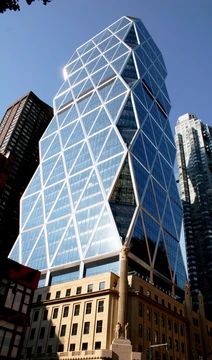
The Atlantic
A literary magazine turned general-interest publication.
The Atlantic is a magazine and multi-platform publisher headquartered in Washington, D.C. It covers politics, foreign affairs, business, culture, technology, and science. The publication was founded in Boston in 1857 as *The Atlantic Monthly*, a literary and cultural magazine that featured commentary on education, the abolition of slavery, and other pressing political issues of the era. Its first issue appeared in November of that year. The magazine was initially conceived at a dinner party at Boston’s Parker House Hotel, where publisher Moses Dresser Phillips gathered literary figures including Ralph Waldo Emerson, Henry Wadsworth Longfellow, and Oliver Wendell Holmes Sr. Among its founders were Francis H. Underwood, W. E. B. Du Bois, Harriet Beecher Stowe, and John Greenleaf Whittier; James Russell Lowell served as its first editor. Stowe declined the dinner invitation because alcohol was served but signed the magazine’s founding manifesto, and *The Atlantic* today counts her as a founder. In 1878, the magazine absorbed *The Galaxy*, a competitor that had published Mark Twain and Henry James. The magazine was published monthly until 2001, when it produced 11 issues; since 2003, it has published 10 per year. It dropped “Monthly” from its cover with the January/February 2004 issue and officially changed its name in 2007. In 2024, it announced it would resume monthly publication in 2025. As of 2024, the website’s executive editor is Adrienne LaFrance, the editor-in-chief is Jeffrey Goldberg, and the CEO is Nicholas Thompson. The magazine was purchased in 1999 by businessman David G. Bradley, who reshaped it into a general-interest publication aimed at serious national readers and “thought leaders.” In 2017, Bradley sold a majority stake to Laurene Powell Jobs’s Emerson Collective. In 2024, the magazine reported it had surpassed one million subscribers and become profitable, three years after losing $20 million in a single year and laying off 17% of its staff. During the 19th and 20th centuries, the magazine also published an annual almanac. Its book-publishing arm, The Atlantic Monthly Press, was founded in 1917 and operated for many years with Little, Brown and Company; it was sold in 1986 and is now an imprint of Grove Atlantic. The magazine was acquired by Mortimer Zuckerman in 1980, and he transferred ownership to Bradley in 1999. Bradley initially promised the magazine would stay in Boston, but in 2005 the editorial offices moved from Boston to Washington, D.C., to create a hub for his Atlantic Media Company. Few Boston staff agreed to relocate, prompting a search for new editorial hires.
- founders
- Moses Dresser Phillips, Francis H. Underwood, Ralph Waldo Emerson, Oliver Wendell Holmes Sr., Henry Wadsworth Longfellow, Harriet Beecher Stowe, John Greenleaf Whittier, and others
- field
- Magazine and multi-platform publishing
- nationality
- American
- known_for
- Literary and cultural commentary, abolitionist roots, longform journalism
Lore & Background
Founded in 1857 in Boston as *The Atlantic Monthly*, the magazine began as a literary and cultural publication that featured commentary from leading writers on education, the abolition of slavery, and other major political issues of the era. Its first issue appeared in November 1857, and its founders included Francis H. Underwood, along with prominent literary figures such as Ralph Waldo Emerson, Oliver Wendell Holmes Sr., Henry Wadsworth Longfellow, Harriet Beecher Stowe, and John Greenleaf Whittier. James Russell Lowell served as its first editor. The magazine was published monthly until 2001, when it produced 11 issues; since 2003, it has published 10 per year. It dropped "Monthly" from its cover in 2004 and officially changed its name in 2007, though it announced in 2024 that it would resume monthly issues in 2025. Originally based in Boston, its editorial offices moved to Washington, D.C., in 2005, and in 2022 it relocated to The Wharf in the city's Southwest Waterfront neighborhood. Today, it features articles on politics, foreign affairs, business, culture, technology, and science, and is owned by Laurene Powell Jobs's Emerson Collective, with Jeffrey Goldberg as editor-in-chief and Nicholas Thompson as CEO.
Reader's Guide
In the 21st century, it has become an influential platform for longform storytelling and newsmaker interviews, with cover stories like Anne Marie Slaughter's 'Why Women Still Can't Have It All' (2012) and Ta-Nehisi Coates's 'A Case for Reparations' (2014). The magazine was purchased by David G. Bradley in 1999, who refashioned it for serious national readers and thought leaders. In 2017, Laurene Powell Jobs's Emerson Collective acquired majority ownership. As of 2024, the magazine had crossed one million subscribers and become profitable after earlier losses.
Did You Know?
- Harriet Beecher Stowe declined the founding dinner because it served alcohol but signed the manifesto and is credited as a founder.
- In 2024, The Atlantic announced it would return to 12 monthly issues in 2025.
Founding & Vision
In 1979, writer Harry Bruce, drawing on years of Halifax connections and a network of freelance contributors like Marilyn MacDonald, partnered with publisher and real estate investor Bill Belliveau to fill that gap. Belliveau commissioned a market research study that confirmed the demand, and the first issue hit newsstands in April 1979 with Bruce at the helm as editor and MacDonald as managing editor. The magazine was conceived as a monthly general-interest publication covering regional news, politics, business, local trends, and biographical profiles of entertainers and businesspeople from the Atlantic provinces.
Ownership Turmoil & Operational Struggles
Despite its editorial ambitions, Atlantic Insight's corporate life was marked by repeated financial instability. The magazine never generated a profit across its entire ten-year run. In October 1982, its parent company Impact Publishing was placed in receivership by the Business Development Bank of Canada. Marilyn MacDonald stepped in as president of a new entity, Northeast Publications, which purchased the magazine and pledged a significant element of regional ownership. In 1986, a CAD$2.4 million printing press project in Saint John, New Brunswick, relocated production away from Montreal. Yet none of these structural changes ultimately saved the publication from its slow decline.
Editorial Voice & Recognition
Atlantic Insight carved out a distinctive editorial identity as the Atlantic provinces' window into their own communities. Its pages covered regional politics, business developments, local trends, and in-depth biographical profiles of entertainers and businesspeople from the region. The magazine's reporting sometimes sparked local controversy; in April 1981, staffer Jon Everett's article on the closure of CFB Chatham examined the economic fallout for the community, and quotes from Mayor Edward Maher drew sharp criticism from Chamber of Commerce President Richard Jardine over perceived inaccuracies. The publication's quality was recognized externally: Atlantic Insight and its individual articles received awards from both the National Media Awards Foundation and the Atlantic Journalism Awards. In 1986, Sharon Fraser—previously editor of Atlantic Fisherman and the Miramichi Leader-Weekend, with newspaper columns across the Maritimes—was appointed editor, expressing enthusiasm for the magazine's regional reporting opportunities. She departed in March 1989, later describing publisher James Lorimer as lacking consistency or clear vision.
The Tobacco Controversy & Final Years
The final chapter of Atlantic Insight was shaped by a battle over advertising that exposed a tension between commercial survival and public health. The group alleged it had contacted the publisher six months earlier requesting ad removal from school-bound copies but received no response, and it called on provincial education departments to ban the magazine from classrooms. The controversy coincided with the federal government's announcement of a total ban on tobacco advertising in magazines, effective 1 January 1989. The publisher cited that ban as the primary driver of the magazine's decline. Atlantic Insight ceased publication in 1990, having never turned a profit in its decade of existence.
Gallery


Frequently Asked Questions
What does The Atlantic cover today?
The modern magazine spans a wide range of topics including politics, foreign affairs, business, culture, technology, and science. It is known for longform journalism and in-depth analysis rather than brief news reporting.
More in Magazines & Newspapers 1-24
Spotted an error? Know more?
This is a living reference — every entry is fact-audited, and reader corrections feed straight into our audit queue. Suggest an edit · See this site's audit record